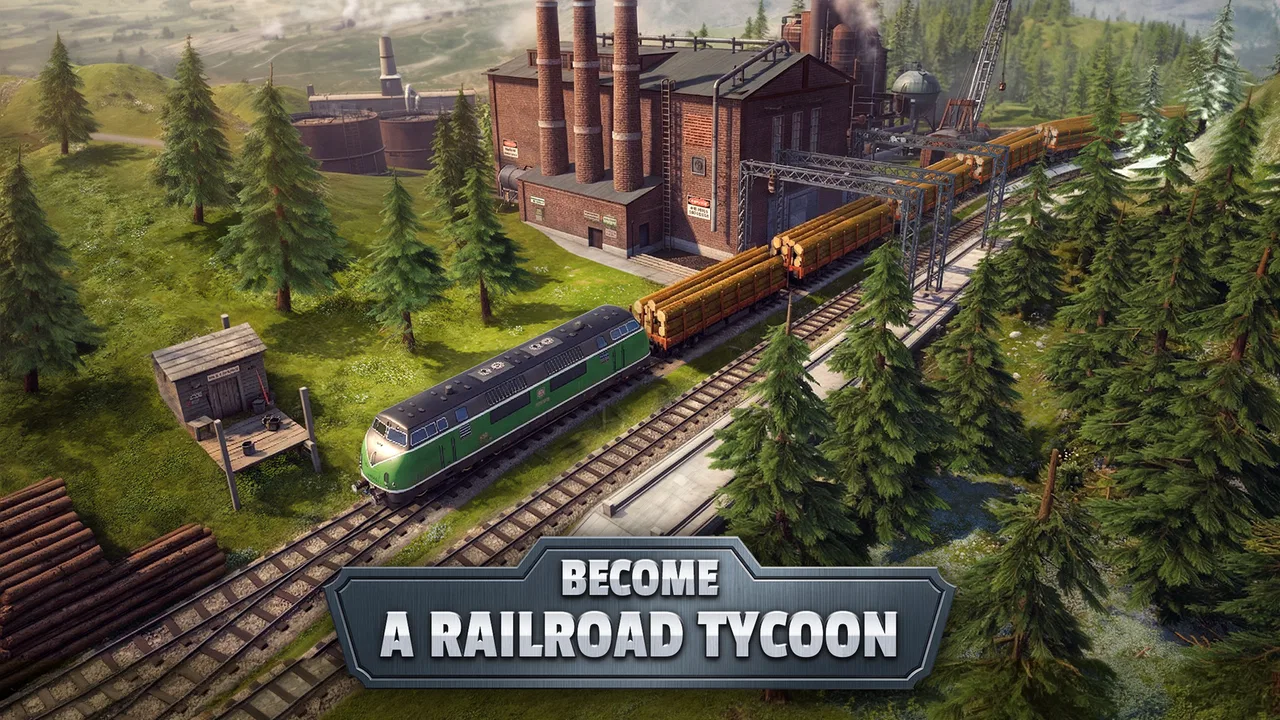
Train Station 3: Rail Games 3D
- 4.3
- Rating
- 1.00M
- Installs
- Free
- Price
 Analysis by App-foxy
I approached Train Station 3 expecting a casual railway builder, but it quickly showed me a more deliberate side. This is a strategy game from PIXEL FEDERATION, s.r.o. in which the satisfying part is not simply watching trains move. The real challenge is deciding what deserves attention first, how much capacity to commit, and when a short-term gain is worth creating a longer-term bottleneck. That makes it a good fit for players who enjoy planning in small steps rather than rushing toward a single final objective.
The game is free to start and rated for Everyone, so it is easy to try without making a financial commitment at the beginning. Its store summary presents a journey of steel and railway domination, but my experience was less about grand slogans and more about making a chain of sensible choices. A train that looks useful in isolation may be the wrong choice if it leaves another task waiting too long. That constant balancing act is where the game earns its place in the strategy category.
It has reached over a million installs, with an average rating of 4.2 from around sixteen thousand ratings. Those figures suggest a broad audience, but they do not tell you whether its rhythm suits you. I would especially point it toward anyone who likes management games with a visible sense of progress, while warning players who want instant action that the pace can feel measured.
You May Also Like

 Blood Strike: 2.5 Anniversary
Blood Strike’s Loadouts Turn Every Drop Into a Tactical Gamble
A close look at Blood Strike’s custom loadouts: how fast access to signature weapons reshapes its battle royale rhythm, rewards preparation, and narrows the gap between fights.

 Pandora - Music & Podcasts
Pandora’s Music Is Easy to Start, but Harder to Recover
Pandora’s strength is its low-effort path from a seed to a station. Its weak spot is how much confidence it asks you to place in connection, setup, and quiet recovery.

 8 Ball Pool
 Is Built on Rivalries, Rematches, and Routine
A close look at the rivalries, rematches, shared routines, and unanswered safety questions that turn a quick pool match into a persistent mobile community.

 Samsung Music
’s Quiet Strength Is Playing What You Already Own
Its reach comes less from spectacle than from dependable access to a personal library. That simplicity is both the app’s strongest retention engine and its ceiling.

 AccuWeather: Weather Radar
AccuWeather Review: A Quick, Clear Forecast for Everyday Decisions
For everyday plans, the best forecast is the one you can understand quickly. AccuWeather makes rain timing, radar, and local conditions easy to act on, with a few trade-offs.

 Hill Climb Racing
Why Hill Climb Racing Still Turns Crashes Into One More Run
A tiny car, a bumpy hill and one more upgrade: Hill Climb Racing keeps resurfacing because its simple chaos makes every near-miss feel personal.
More From Our News Desk



Planning a railway instead of merely collecting trains
The central appeal is the way ordinary choices accumulate. At first, it is tempting to treat every available task as equally important. I found better results by asking what each decision would unlock afterward. A job that appears less rewarding can still be valuable if it keeps the wider operation moving, while a more attractive assignment may consume the resources or time I need for a more useful follow-up.
That creates a practical planning horizon. I did not need to predict the entire game, but I did need to think beyond the next tap. My most reliable habit was to look at the immediate request, then mentally check the next two likely consequences: which train would be unavailable, what opportunity would be delayed, and whether the reward would improve my position or merely make the current screen look better.
The strongest decisions are usually the ones that protect your next option. That sounds simple, yet it changes how the game feels. Instead of spending everything as soon as it becomes available, I began keeping a small reserve for situations where an unexpected requirement appeared. This made progress feel less fragile and reduced the frustration of reaching a promising point with no flexibility left.
The railway theme also helps the decisions feel connected. Tasks are not just unrelated buttons in a menu; they contribute to the impression of building an operating network. Even when the underlying action is familiar from other mobile management games, the train-focused presentation gives each choice a clear identity. I was more willing to plan around a delayed result when that delay felt like part of running a railway rather than an arbitrary timer.
Small choices have larger consequences
One useful way to play is to separate “progress” from “activity.” Completing something immediately can feel productive, but it is not always the same as improving the whole network. I learned to judge a choice by what it enables, not only by what it pays out. This is particularly important during a short play session, when there is a temptation to use every available action simply because the game presents it.
For example, if I only had a few minutes, I preferred setting up a sensible sequence rather than beginning several unrelated tasks. That approach made returning later more rewarding because the next decision was already prepared. It also prevented the common management-game mistake of scattering attention across too many partially useful objectives.
This is one of the less obvious strengths of the game: it can turn a brief check-in into a planning exercise. I could play actively, but I did not always need to. Sometimes the best move was to arrange the next stage and leave the game alone until the operation had advanced. Players who enjoy optimizing a schedule will appreciate that pause-and-return rhythm more than people who expect every session to deliver constant interaction.
Where risk and reward begin to matter
The game becomes more interesting when I stop asking, “What gives me something now?” and start asking, “What can I afford to delay?” Every decision has an opportunity cost, even when the interface makes the choice look harmless. Using a train for one purpose can mean waiting longer for another. Committing resources to a visible improvement can leave less room for a task that is not yet urgent but may become important soon.
I would not describe the risk as harsh in the same way as a competitive strategy game where one mistake ends a match. The pressure is softer, but it is persistent. Poor sequencing can make the next stretch feel slower, and careless spending can remove the freedom to react. That is enough to create tension without turning the game into a punishing experience.
My advice is to treat rewards as tools rather than trophies. A reward is most valuable when it helps maintain a smooth chain of actions. If it only encourages me to expand in several directions at once, it can actually make the operation harder to manage. This is where the game rewards patience: a modest improvement that keeps the system flexible may be better than a flashy choice that leaves everything stretched.
The free-to-play structure also belongs in this discussion. The game is free, but optional purchases range from $0.49 to $199.99 per item. That broad range means players should decide early what role spending will have in their experience. I was comfortable treating purchases as optional support rather than part of the basic strategy, but anyone sensitive to premium prompts should pay attention to how often they are willing to trade convenience for money.
I recommend setting a personal rule before playing for a long period. For me, that would mean deciding whether I am willing to pay only for occasional convenience or not at all. Without a boundary, a management game can make a small delay feel more irritating than it really is. Once I accepted that not every task needed to be accelerated, the slower moments became easier to judge on their own terms.
A realistic daily use case
Imagine checking the game during a commute or while waiting for an appointment. I would first review which railway tasks are active, then choose the assignment that best protects the next part of the schedule rather than automatically selecting the most obvious reward. Before closing the app, I would make sure the next action was clear and avoid spending resources simply to empty the available options.
Later, during a longer break, I could return to collect the results, reassess the network, and make a more involved decision. This works well because the game supports a rhythm of short planning visits instead of demanding a single uninterrupted session. It is less suitable if you want a game that can be played entirely offline in quick bursts with no waiting or management overhead; its appeal depends on caring about the state of the railway between visits.
A second useful scenario is playing alongside another activity at home. I found it better as a background strategy game than as something requiring complete concentration every minute. I could make a decision, put the phone down, and come back later with a clearer idea of what needed attention. That said, players who prefer games with a decisive beginning and end to every session may find this open-ended structure less satisfying.
Adapting when the first plan stops working
No railway plan should be treated as permanent. The most useful adjustment is to notice when a goal is consuming more of the system than it deserves. If several actions are competing for the same limited attention, I would stop and identify the one that restores the most flexibility. Continuing with a weak plan simply because it was started is a common trap in management games, and Train Station 3 gives me enough interconnected choices to make that trap noticeable.
I also found it helpful to change the length of my planning horizon. When the network was stable, I could think several steps ahead. When priorities became crowded, I narrowed my focus to the next useful handoff. This prevented overplanning and made adaptation feel practical rather than theoretical. The best strategy was not always the most ambitious one; sometimes it was simply the plan that could recover cleanly from a delay.
That recovery mindset is important for new players. I would not restart or panic after one inefficient decision. Instead, I would identify what the mistake blocked, then choose the next action that opens the most alternatives. The game is more enjoyable when I treat setbacks as information about the network rather than proof that the whole run has gone wrong.
For experienced management-game players, the deeper challenge is resisting automatic habits imported from other titles. A strategy that works in a city builder or a faster competitive game may not translate here. Train Station 3 rewards attention to sequence and timing, so aggressive expansion is not automatically superior to controlled development. The railway theme is not just decoration; it encourages thinking in routes, dependencies, and handoffs.
How the depth develops over time
The current version is 1.15.1, and the game has enough structure to become more demanding as the player grows familiar with its rhythm. I noticed that my early decisions were mostly about understanding what was available. Later, the interesting question became how to arrange those options efficiently. That shift from learning the interface to managing priorities is what gives the game more staying power than a simple collection game.
Its depth is gradual rather than intimidating. I did not need to understand every possible consequence immediately. I could begin with one practical goal, observe how it affected the rest of the railway, and then refine my approach. This makes it accessible to newcomers while still giving experienced players room to think about efficiency and timing.
There is a trade-off here. Because the depth grows through repeated planning, the game may feel slow if you are waiting for dramatic new systems to appear every few minutes. I enjoyed the gradual development, but I can see why someone looking for constant novelty might lose interest. The pleasure comes from improving judgment, not from being overwhelmed by new mechanics.
Compared with a traditional city-building game, this feels more focused on the movement and use of railway assets than on designing a broad urban landscape. Compared with a competitive strategy title, it is more forgiving and less centered on defeating another player. And compared with an idle game, it asks for more deliberate choices instead of merely collecting progress whenever you return.
That middle position is useful. If you like the idea of an idle game but want more control, this may be a better fit. If you want the deep diplomacy, direct conflict, or detailed construction of a full strategy simulation, it may feel too guided. I would choose it for a manageable railway-planning experience, not as a replacement for a complex desktop tycoon game.
Who should play and who should pass
I think the best audience is someone who enjoys steady progress, resource judgment, and the satisfaction of improving a plan after seeing its consequences. It is also a good option for players who like returning to a game throughout the day and making a few meaningful decisions each time. The Everyone rating makes it approachable, while the strategic layer gives adults enough to consider beyond the visual theme.
I would be more cautious recommending it to players who dislike timers, free-to-play pressure, or any game where patience is part of the strategy. The purchase range may also make it unsuitable for someone who wants a completely frictionless premium experience. Even if you never spend, you need to be comfortable with the game setting its own pace rather than giving you unlimited freedom at once.
New players should avoid trying to optimize everything immediately. Start by watching how one decision affects the next, keep some flexibility, and resist the urge to spend every reward the moment it arrives. Returning players can improve by reviewing their previous choices: which actions created useful follow-ups, and which ones only produced short-term activity?
For me, the most valuable advanced habit was maintaining a “recovery option.” I tried not to commit every useful asset or reward to one narrow plan. Leaving one route toward progress made later adaptation much easier. This is not flashy advice, but it is the kind of habit that separates a smooth session from a frustrating one.
My strategy verdict
Train Station 3 succeeds because it makes railway management feel like a sequence of decisions rather than a decorative backdrop. I enjoyed weighing immediate rewards against future flexibility, adjusting plans when priorities changed, and using short visits to prepare a better next session. The game is approachable, but it is not mindless; its best moments come from recognizing that the efficient choice is not always the most obvious one.
PIXEL FEDERATION, s.r.o. has shaped this as a free strategy game with a broad reach, and the result should appeal to players who want a relaxed but thoughtful management experience. The optional purchases, including items priced up to $199.99, are the main reason I would advise setting expectations before settling in. The game is most enjoyable when I let planning, rather than impatience, determine the pace.
My final recommendation is positive with a clear condition: try it if you like building a routine around connected choices and gradual improvement. Skip it if you need immediate action, a fixed end point, or a fully premium structure. For the right player, the reward is not simply owning more railway progress. It is learning how to keep the whole operation moving while making room for the decision that comes next.
FAQs for Train Station 3: Rail Games 3D
01What is Train Station 3 and how does it differ from previous versions?
Train Station 3 is the latest installment in the popular Train Station series, offering enhanced graphics, more complex railway networks, and a wider variety of trains. Unlike previous versions, Train Station 3 introduces real-time multiplayer features and expanded customization options for your train stations, allowing for a more immersive and interactive experience.
02Is Train Station 3 free to play, and are there in-app purchases?
Train Station 3 is free to download and play, which makes it accessible to a wide audience. However, the game does include in-app purchases that allow players to buy additional resources or unlock special trains and features. While not necessary to enjoy the game, these purchases can enhance gameplay and speed up progression.
03What are the system requirements for Train Station 3 on Android and iOS?
For Android, Train Station 3 requires at least Android version 5.0 and 2GB of RAM to run smoothly. On iOS, the game is compatible with devices running iOS 11.0 or later. It’s recommended to have a stable internet connection for online features, and ensure you have enough storage space for updates and additional content.
04Are there any social or multiplayer features in Train Station 3?
Yes, Train Station 3 includes social and multiplayer features that allow players to connect with friends and other players worldwide. You can collaborate on building stations, exchange resources, and compete in railway challenges. The integration with social media platforms makes it easy to share your progress and achievements.
05Can I play Train Station 3 offline?
While Train Station 3 is primarily designed to be played online, allowing for real-time updates and multiplayer interactions, there are some aspects of the game that can be enjoyed offline. However, certain features, like trading and competitions, require an internet connection to function properly.
Pros
- Impressive 3D graphics and animations.
- Wide variety of trains to collect.
- Engaging daily challenges and tasks.
- User-friendly interface for easy navigation.
- Regular updates with new content.
Cons
- Can be resource-intensive on older devices.
- In-app purchases can be costly.
- Requires constant internet connection.
- Gameplay may feel repetitive over time.
- Occasional bugs and glitches reported.

Train Station 3: Rail Games 3D
Gallery